

Creating those 'Aha moments'
Taking the opportunity to change people's minds about disabilities

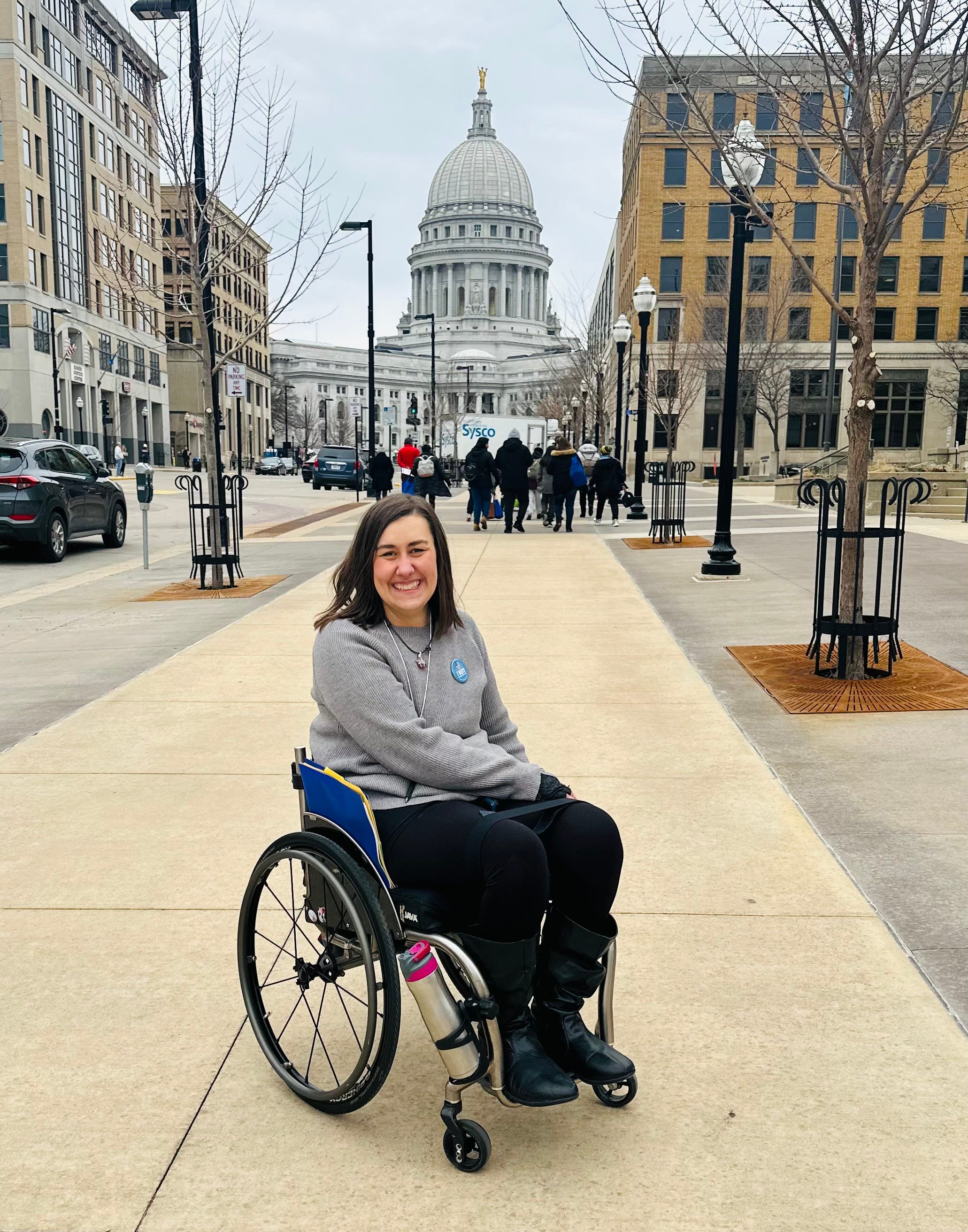
“A lot of times, advocates try to change people’s minds about disabilities by using their lived experiences to give them those ‘aha moments.’
“If I try too hard to deliver those moments to people who aren’t receptive, I’ll exhaust myself.
“BUT, when I have the opportunity to present those ‘aha moments,’ I will choose them.”
That’s what Autumn Nordall, the subject of today’s story, told me.
I want to focus on those “aha moments” today. Because that’s what my newsletter is highlighting for the foreseeable future — the empathy that comes from listening to the experiences of others. Those moments when a person’s story gets through and minds are changed.
It will probably come as no surprise to my readers that I met the subject of today’s newsletter, Autumn Nordall, at the October Self-Determination Conference hosted by the Wisconsin Board for People with Developmental Disabilities.
That’s also where I met Jordan Anderson, Sandy Anderson, and the person whose story I’m going to feature next month.
Autumn — who has used a wheelchair since she sustained a spinal cord injury in a car accident when she was 16 — was at the conference to advocate both for herself and to advocate for the people she serves through her job as director of advocacy and outreach at Options for Independent Living, a nonprofit organization whose mission is to “empower people with disabilities to live independent and productive lives.”
If you would like to support my story-sharing endeavors outside of this newsletter, head over to my BuyMeACoffee account!
‘Nothing about us without us:’ The necessity of lived experience
Autumn told me that her rise through the ranks at Options “really organically happened.” The Green Bay-based organization provides a number of services for people with disabilities — including peer support, a legislative advocacy network, information and referrals, assistive technology, and assistance in adapting people’s homes for disability accessibility — all in an effort to promote independent living.
Autumn “started out as a consumer of their services” when she sustained a spinal cord injury after being ejected from her car during an accident when she was 16. When her mother realized Autumn couldn’t come back to live at her home until it was made accessible, she “got in touch with Options, and someone came to talk to her. She visited the showcase model home (set up to show options for accessibility), and “learned about independence, and disability, and life being able to go on — all these things I wasn’t really considering at 16.”
